
Introduction: Elevating Your Beverage Programme
Cold drinks drive the best profit margins across busy bars and cafes. When looking at commercial bottle coolers for sale, focus on reliability and running costs. Every bar manager knows that warm lager ruins an evening rush. A good chiller protects your beverage stock and keeps customers coming back.
Pair your front-of-house display units with a smart floor plan. The right chilling system keeps your staff moving quickly during peak hours. Let us look at how unit size and placement shape your daily bar service.
Evaluating Commercial Bottle Coolers for Sale: Form Factor and Footprint
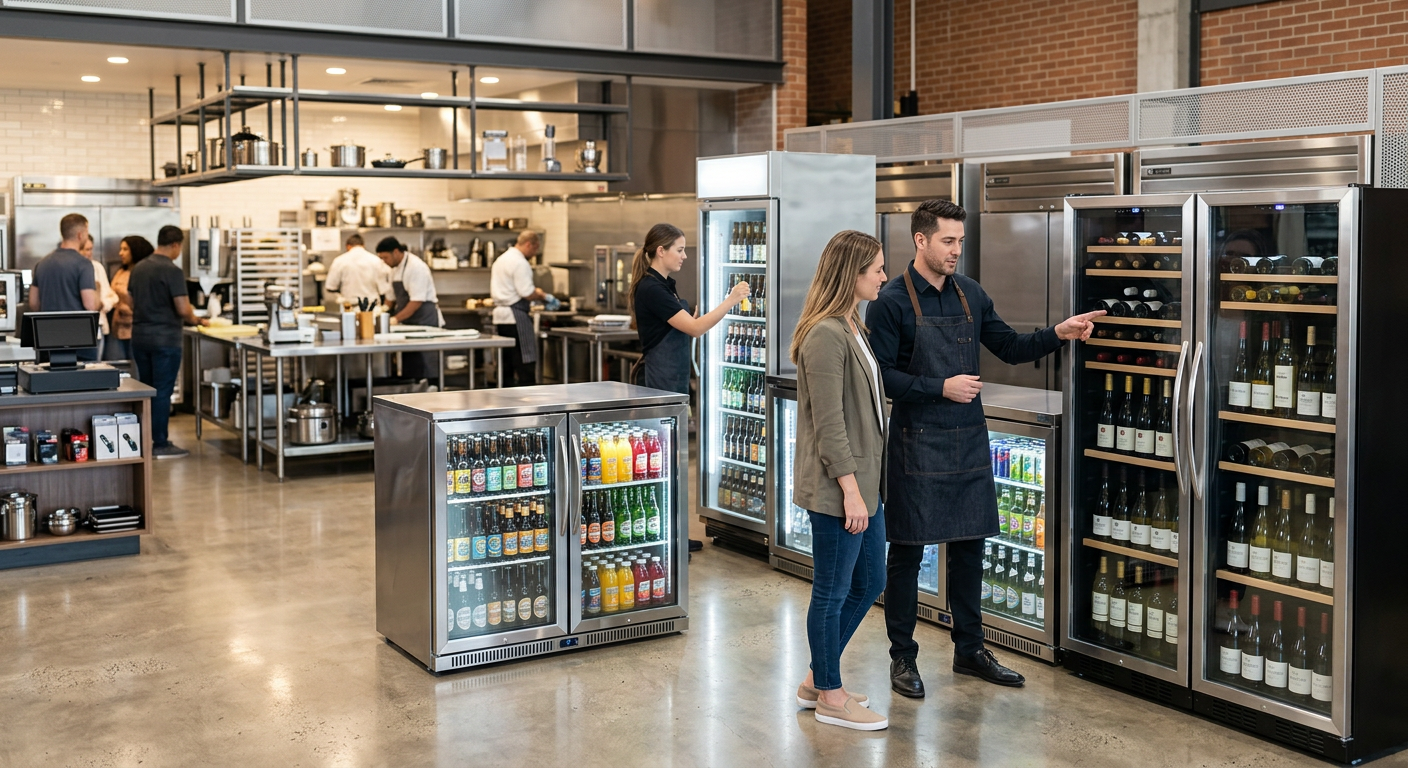
Every venue works with unique floor plans and customer traffic patterns. Matching your cabinet style to your daily workflow prevents bad service bottlenecks. Proper spatial planning also keeps your bartenders moving quickly when drink tickets pile up.
Horizontal Deep-Well vs. Upright Merchandisers vs. Undercounter Units
Horizontal deep-well units excel in high-volume nightlife settings. Bartenders can slide open top lids and grab cold bottles in seconds. These chest-style wells hold massive stock reserves, though they offer limited visual display for patrons.
Upright merchandisers work best across retail sales floors and grab-and-go counters. Full-height glass doors place cans right at eye level to drive impulse buys. Vertical shelves also make it much easier to rotate stock during daily restocking runs.
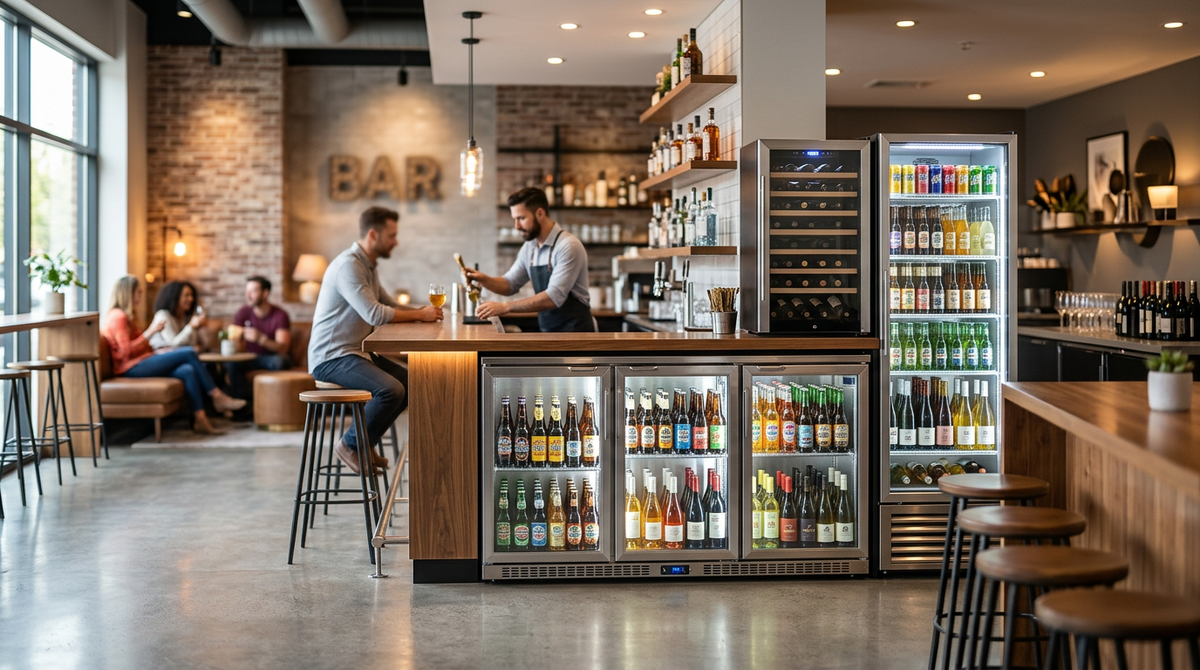
Undercounter units offer the most practical footprint for traditional back-bar setups. They sit neatly below standard counters without blocking sightlines across the bar. Staff can quickly grab wines, tonics, and craft mixers without leaving their stations.
Front-of-House Ambiance: Noise Ratings, Glazing, and LED Lighting
Equipment design shapes customer perception just as much as your interior decor. Front-of-house chillers must run quietly to protect your dining atmosphere. CIBSE guidelines suggest keeping indoor dining noise under 45 decibels. Loud cooling fans can easily ruin a relaxed conversation at nearby tables.
Door glazing affects both your power bills and product display. Standard double-glazed panes work fine in climate-controlled rooms. In warmer dining spaces, heated triple-pane glass stops condensation and keeps your stock clearly visible.
Lighting finishes the overall presentation. Energy-saving LED strips with high colour rendering make beverage labels pop. Warm lighting creates an intimate bar mood, while bright white light drives fast daytime sales.
Choosing the right layout sets your bar up for long-term success. Beyond size and looks, your ongoing operating costs demand close attention.
Energy Standards, Refrigerants, and Total Cost of Ownership
A low sticker price often hides massive energy bills over time. In hospitality, power costs soon overtake the initial purchase price of equipment. Looking at a five-year running cost gives you a much clearer financial picture. Smart cooling components protect your cash flow across busy trading seasons.
Navigating Current Efficiency Ratings and Eco-Refrigerant Transitions
Modern EcoDesign rules require strict energy label compliance for display refrigeration. Understanding commercial energy ratings in the UK helps operators make cost-effective decisions. Cabinets running on natural R290 hydrocarbon refrigerants carry near-zero Global Warming Potential. Switching to natural gas helps you avoid regulatory fines as older coolants phase out.
Modern commercial bottle coolers for sale pair R290 gas with brushless EC fan motors. These motors use up to 60 percent less power than older designs. When paired with Low-E glass, the cabinet traps cold air inside and lowers daily power use.
Calculating Real ROI: Energy Consumption vs. Inventory Turnover
Working out your true return on investment means looking beyond electrical wattage. You must balance daily running costs against stock turnover and drink quality, and investing in energy efficient display chillers is critical to maintaining profit margins. Hospitality energy audits show efficient chillers save £250 to £400 per unit each year.
Fast temperature recovery protects your margins during busy trading periods. When staff open doors constantly on Friday nights, quick pull-down keeps drinks near 3°C. Inconsistent temperatures spoil craft beer, but efficient cooling keeps stock perfect and ready to serve.
Top Commercial Bottle Coolers for Sale for Modern Venues
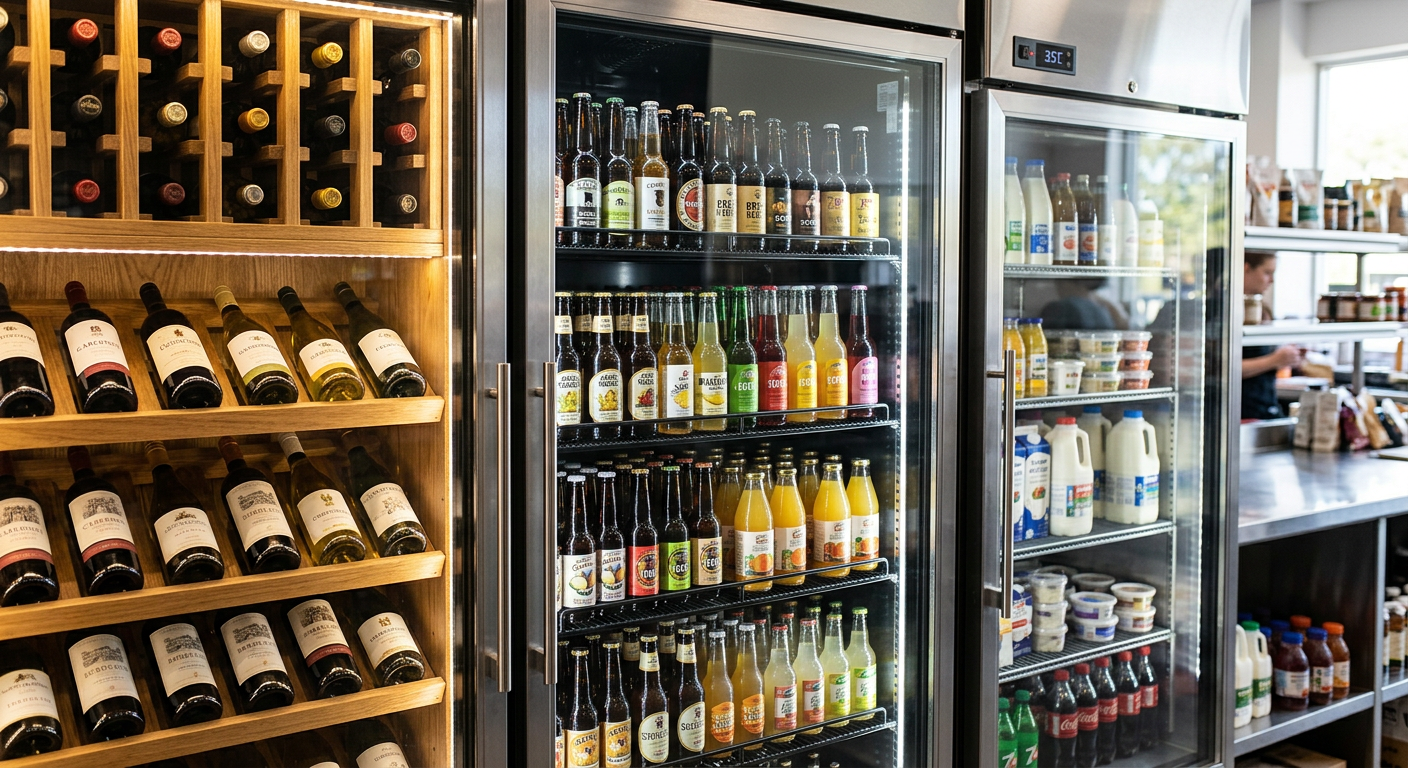
Picking commercial bottle coolers for sale requires matching hardware to customer volume. Back-bar spaces frequently use undercounter triple-door cabinets, or venues may look to buy a 3-door display chiller for higher front-of-house volume. These low-profile units hold up to 300 bottles beneath standard 900mm counters. Internal circulation fans keep temperatures steady between 2°C and 6°C throughout demanding shifts.
For self-service convenience stores and cafes, an upright 2 door glass display fridge delivers superior visibility. These tall showcases hold around 800 to 1,000 litres of chilled drinks. Vertical side lights illuminate bottles without pumping heat into the cabinet. Carbon Trust data confirms that hydrocarbon chillers cut power use significantly.
High-volume clubs often pick pass-through back-bar chillers. Front and rear doors let stock runners reload shelves from behind without disrupting service. Toughened glass panes lock cold air inside during warm summer rushes. Clear digital thermostats allow your team to check internal temperatures at a glance.
Even the best cooling systems fail without consistent cleaning. Routine care protects your performance and guards your hard-earned capital investment.
Maximising Equipment Lifespan Through Strategic Maintenance
Routine maintenance protects your balance sheet from expensive breakdowns. When browsing commercial bottle coolers for sale, you want hardware built to last. Condenser coils gather lint and dust over time. Dirty coils can increase power draw by 20 percent, so vacuum them monthly to help heat escape easily.
Inspect your door gaskets every single month. Cracked or brittle rubber seals let warm kitchen air seep inside the cabinet. Air leaks force the compressor to run constantly, raising bills and wearing down parts. Slide a paper note into the door frame; replace the seal if it slips out easily.
Airflow clearance around external vents directly shapes motor lifespan. Undercounter chillers need dedicated ventilation paths around their bottom vents. Pushing units tight against solid walls traps pockets of hot exhaust air. Foodservice Equipment Association experts recommend leaving at least 50mm of clear space around grilles.
Create a simple maintenance checklist for your shift supervisors to follow. Quick tasks like wiping fan blades and cleaning shelves stop frost accumulation. Routine preventative care keeps your cabinet running at peak efficiency for a decade or longer.
Summary: Choosing the Right Bottle Cooler for Your Business
Finding the right unit comes down to balancing floor space, running costs, and storage capacity. Modern commercial bottle coolers for sale use eco-friendly coolants that drop utility bills. Natural R290 refrigerant keeps operating costs low and chills drinks quickly during peak rushes.
Take time to review your bar layout before ordering your next drinks chiller. Match your door swings and shelf capacities to your expected customer counts. Clean internal fans and vacuum exterior coils regularly to protect your investment. Smart equipment choices today ensure crisp beverages and lower electric bills for years to come.
Frequently Asked Questions
Which commercial bottle cooler design works best for a standard back-bar setup?
Undercounter bottle coolers provide the most practical footprint for traditional back-bar areas. They fit neatly beneath standard 900mm counters without obstructing customer sightlines, allowing staff to grab wine, tonics, and craft mixers without walking away from their stations. Triple-door models can hold up to 300 bottles while maintaining steady temperatures between 2°C and 6°C throughout demanding bar shifts.
What type of refrigerant should I look for to lower running costs?
Modern commercial bottle coolers utilize natural R290 hydrocarbon refrigerants, which feature near-zero Global Warming Potential. Pairing R290 gas with brushless EC fan motors can cut motor power consumption by up to 60 percent compared to older designs. In addition to reducing environmental impact and avoiding regulatory fines, efficient chillers save businesses between £250 and £400 per unit each year on operating costs.
How can I prevent glass condensation on my commercial drinks display?
To prevent condensation in warmer dining rooms, choose chillers equipped with heated triple-pane glass doors. While standard double-glazed glass performs adequately in climate-controlled spaces, heated triple glazing stops moisture buildup so your beverage stock stays clearly visible to customers. Pairing this glass with Low-E coatings also helps trap cold air inside the cabinet, reducing power draw.
How much clearance space is required around an undercounter bottle cooler?
Foodservice Equipment Association experts recommend leaving at least 50mm of clear space around the ventilation grilles. Undercounter chillers require dedicated ventilation paths around their bottom vents to function properly. Pushing equipment tightly against solid walls traps pockets of hot exhaust air, which forces the motor to work harder, raises your power bills, and shortens the compressor life.
About This Article
Editorial Disclosure: This article was researched and written by our content team to provide helpful, accurate information about commercial bottle coolers for sale. We regularly review and update our content to reflect the latest industry developments and best practices.